



Lulatsch
A Lulatsch is a tall, often rather lanky person.
“Was bist du für ein langer Lulatsch geworden!” Tall teenagers hear this remark about how much they have grown surprisingly often at family gatherings.
A book by Wolf Marbach
Words from the past – and what they still tell us today
Fisimatenten. Kokolores. Mumpitz. Some words bring back a familiar voice. Others leave you wondering what on earth they mean. Which ones do you know?
Discover the words ↓The book is in German · External links to Amazon.de
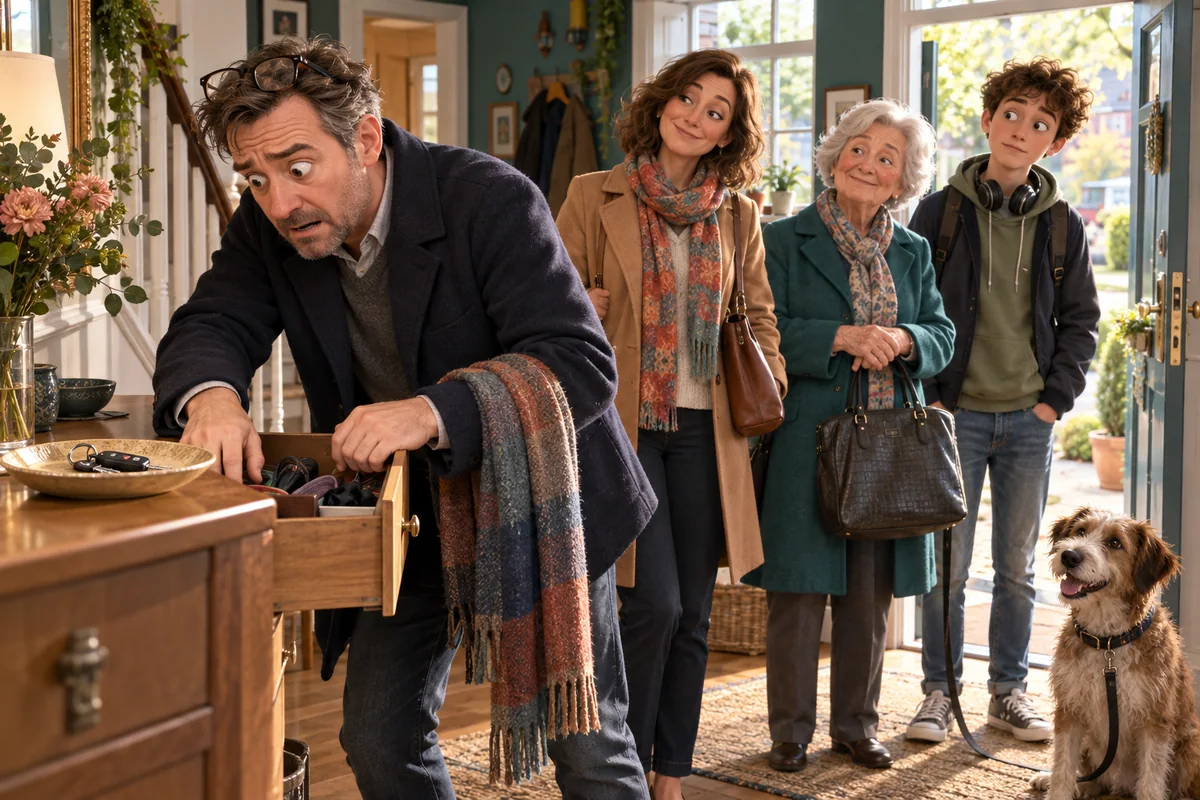
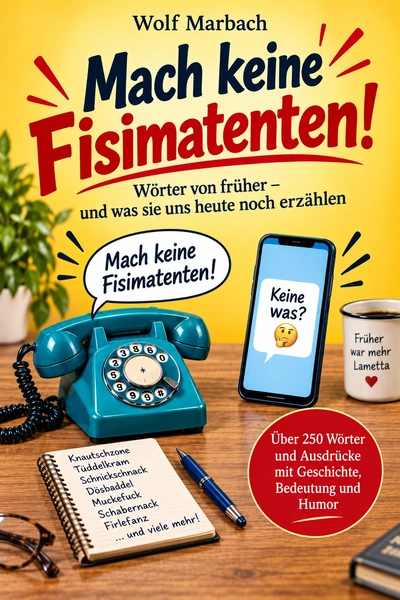
“Nun mach keine Fisimatenten und zieh endlich die Schuhe an!”Someone making Fisimatenten creates unnecessary fuss, makes excuses or delays something that should be simple.
Little words, vivid stories
A glimpse into the book’s world of words. The English text here helps you explore the German expressions; the book itself is in German.
A Lulatsch is a tall, often rather lanky person.
“Was bist du für ein langer Lulatsch geworden!” Tall teenagers hear this remark about how much they have grown surprisingly often at family gatherings.
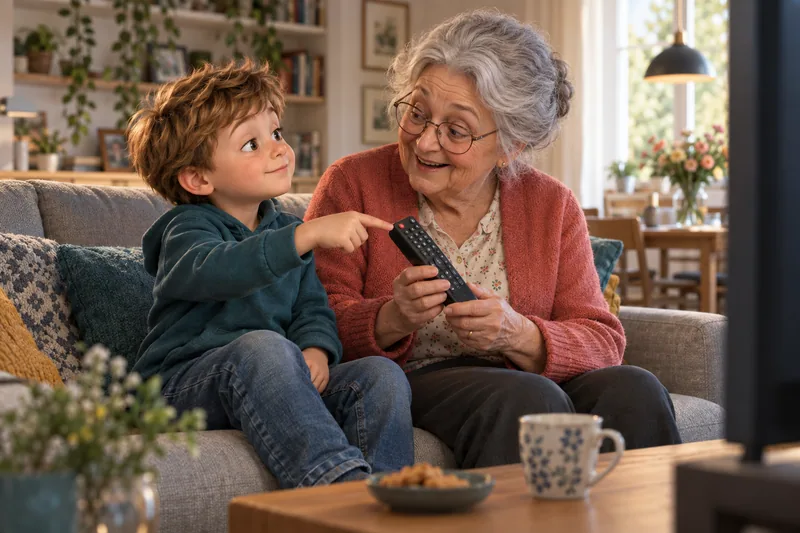
A Dreikäsehoch is a small child who often thinks of themselves as quite grown-up already.
A five-year-old explains to his grandmother how the television works. She listens patiently. The awkward part: he is right.
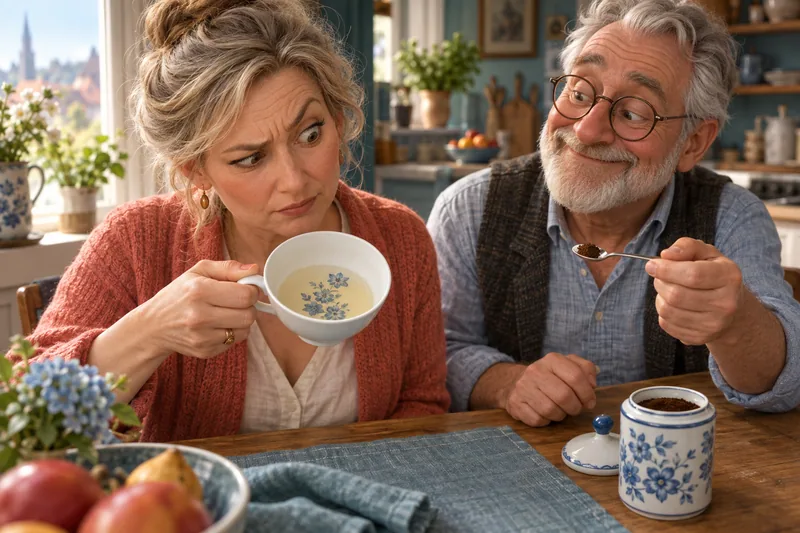
Blümchenkaffee is exceptionally weak coffee.
The familiar idea behind it: the coffee is so weak that you can still see the flower pattern on the bottom of the cup.
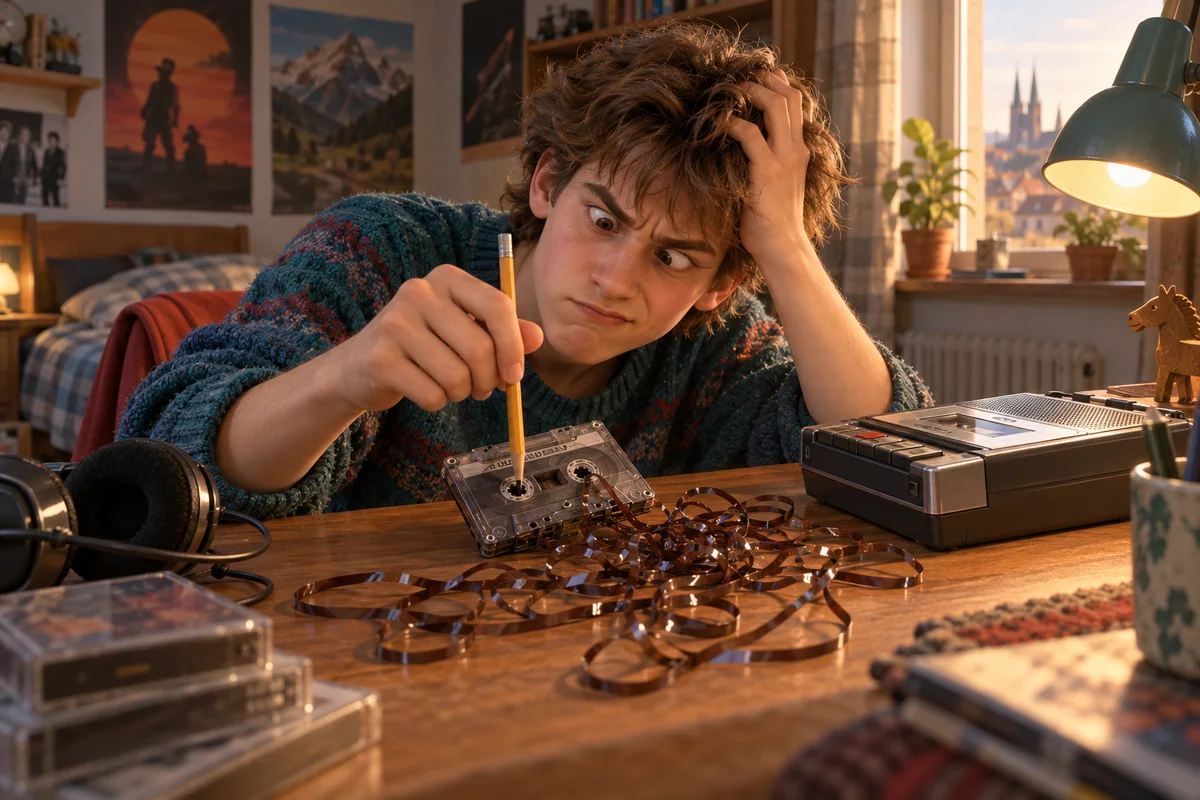
Bandsalat happened when the thin magnetic tape of a cassette got caught in the recorder and came out in long loops.
Then the rescue operation began: with a pencil, a delicate touch and hope.
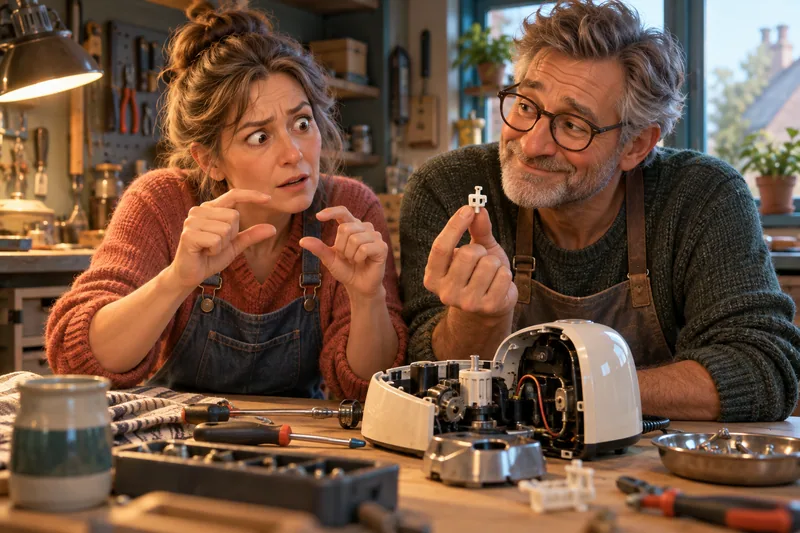
“Gib mir mal den Pinökel da.” Which one? That one, there.
Pinökel, Pinnökel or Pinöckel is an all-purpose word, especially in the Rhineland, Westphalia and the Ruhr region, for a small part whose proper name you cannot recall.
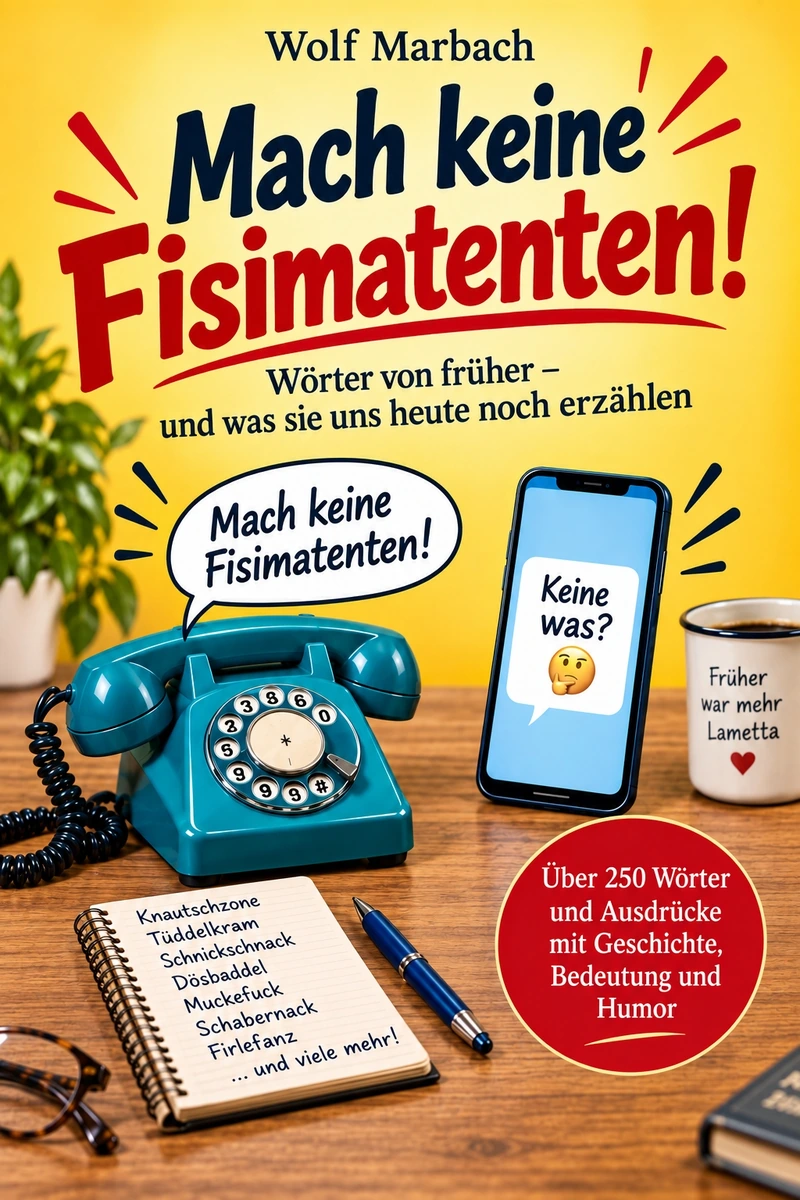
The third book
“Mach keine Fisimatenten!” brings together words and expressions from everyday life, family, school, work and leisure. With stories, familiar situations and plenty of humour.
The book is in German · External links to Amazon.de
Language has a map
Stulle, Knifte, Bemme, Schnitte, Butterbrot or Bütterken: Germany has a remarkable number of names for a slice of bread. An unusual word is not always a forgotten word. Sometimes it is simply regional.
In the north people schnacken; elsewhere they klönen, ratschen or schwätzen. These different words for chatting give people plenty to talk about.
Keep exploring in the book
From childhood and school to the family living room: these are the book’s twelve chapters. The original German titles are shown below.
Nonsense, fuss and unnecessary complications
People, characters and colourful insults
Childhood and school
Exclamations, scoldings and reprimands
Dancing, flirting and relationships
Food, drink and regional language
Clothing and fashion
Work and occupations
Money and shopping
Home, household and technology
Getting about and leisure
Words that make situations vivid
Words connect generations
For German-speaking parents, grandparents, learners and anyone who enjoys language. The next conversation might begin with a single word.
The book is in German · External links to Amazon.de